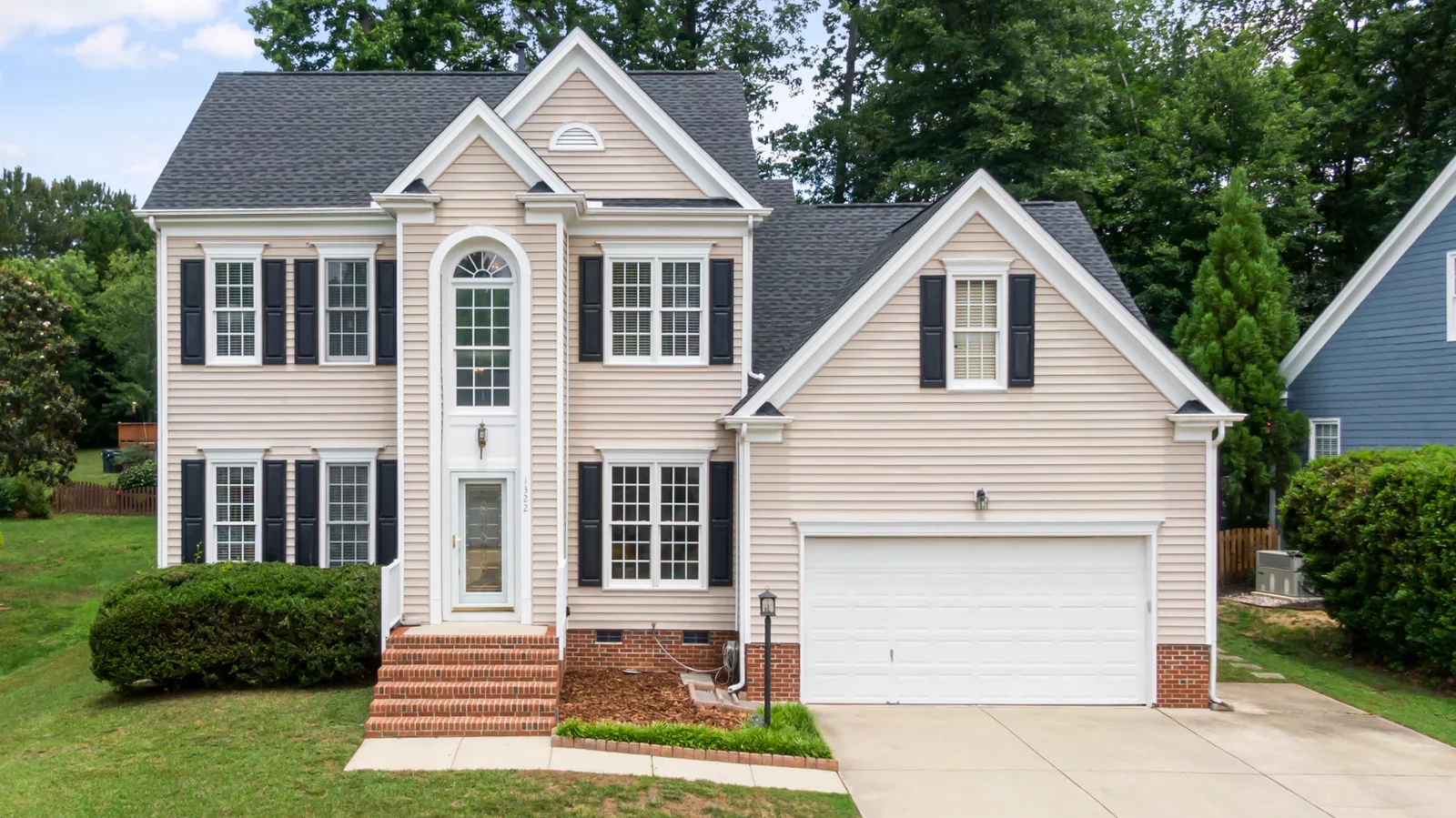
Step flashing
Individual pieces at a sloped roof-to-wall junction overlap with shingle courses, directing water back onto the roof as it travels down the slope.
A roof-to-wall joint needs a connected water path. We repair flashing at chimneys, walls and roof transitions so rain can move onto the covering below.
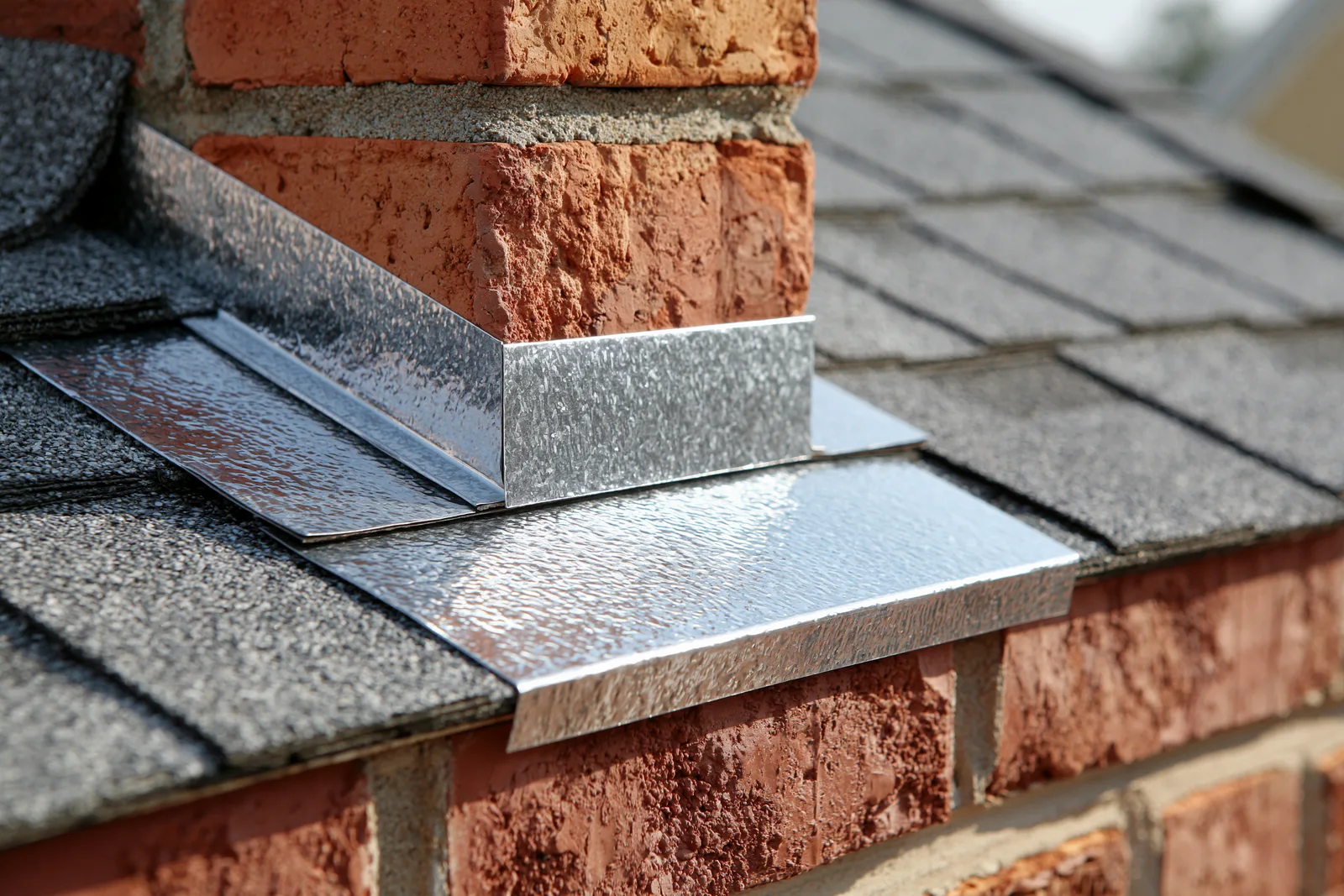
A chimney interrupts the roof surface. Flashing bridges that interruption and directs water around it. When metal has pulled away, overlaps fail or the roof-to-wall connection is missing, rain can enter beside the masonry or wall.
The useful repair depends on the detail and the material around it. We look at the flashing, adjoining roofing and visible wall condition before deciding how much needs to be opened and rebuilt.
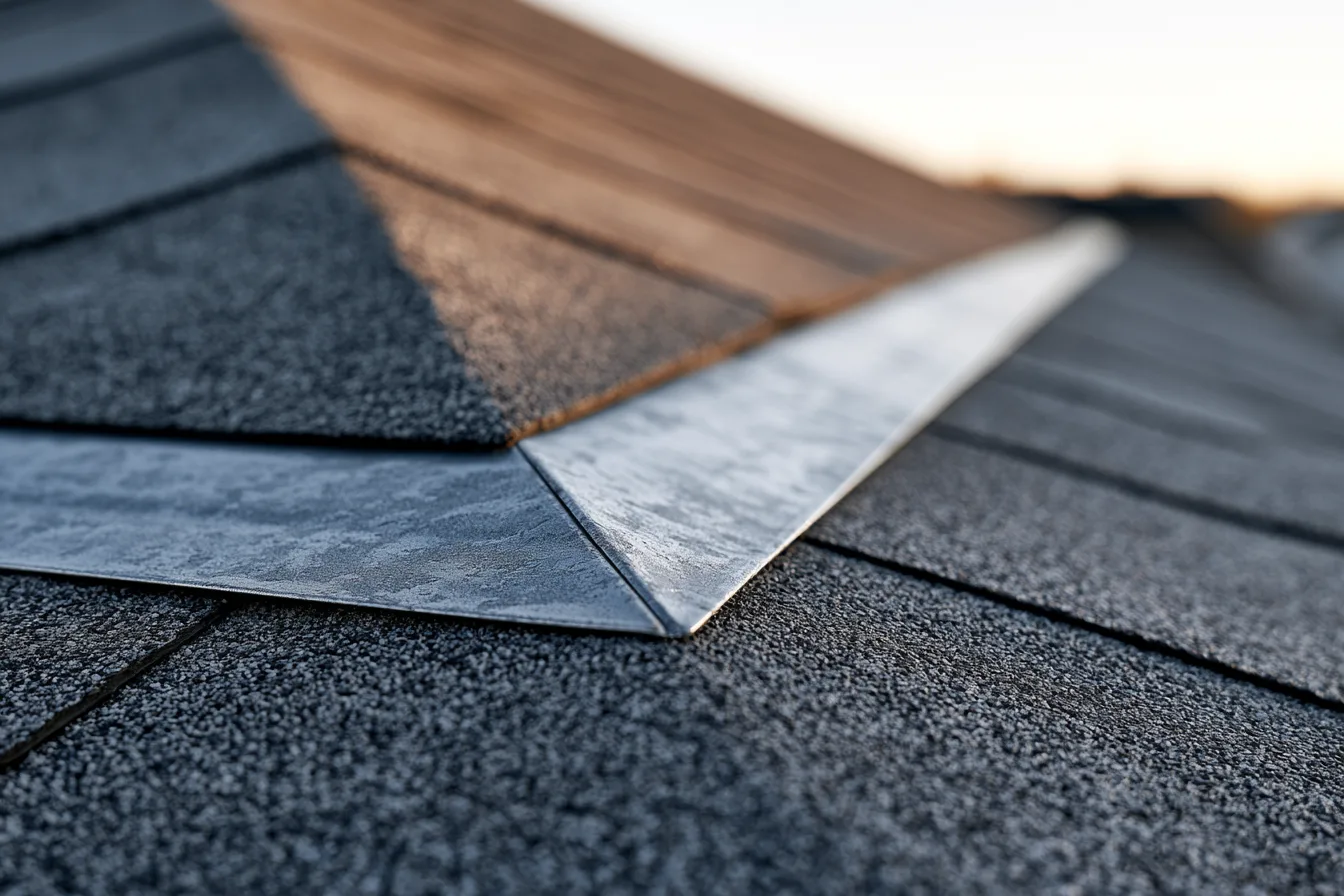
The pieces work together rather than as a bead of sealant around the joint.
Individual pieces at a sloped roof-to-wall junction overlap with shingle courses, directing water back onto the roof as it travels down the slope.
The upper flashing protects the top edge of the lower pieces at a masonry chimney or wall. Its connection and condition affect water entry above the roof.
At the end of a wall intersection, kick-out flashing sends water away from siding and toward the drainage path. Missing or damaged pieces can send rain behind the wall.
A chimney leak can involve the roof and the chimney itself.
Shingles and underlayment disturbed for a flashing repair need to reconnect to sound adjoining layers. The roof repair guide explains that boundary.
Cracked masonry, a failed crown or other chimney defects need the appropriate masonry work. A roof flashing repair does not rebuild the chimney above it.
A reroof is an opportunity to address failing flashing while the surrounding covering is open. The actual existing condition determines which details need renewal.
No. Sealant cannot replace missing flashing overlaps or resolve defects higher on the chimney. The water route needs to be established before choosing the work.
Yes, where the repair can be integrated with workable surrounding material and sound underlying layers. Brittle shingles or damaged decking can widen the opening needed.
Wind can push water into a connection that sheds an ordinary shower. That pattern helps focus the inspection, but the failed detail still needs to be identified.
Tell us where the leak appears and whether it is beside a chimney or wall. Start with a free roof inspection.