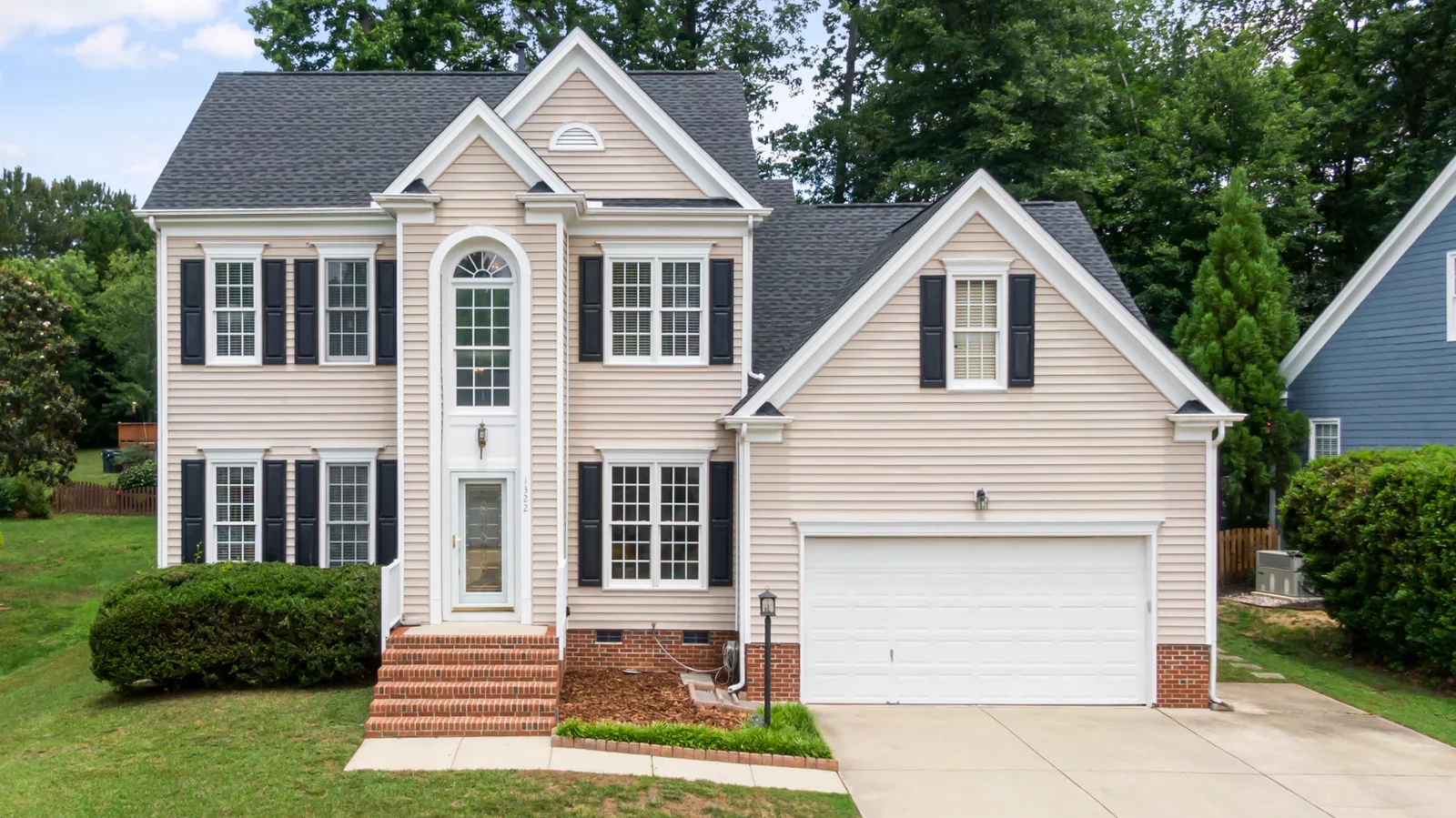
Tear-off
Removal exposes the deck and allows unsuitable or wet layers to be addressed. It adds removal, disposal and temporary weather-closure work.
A commercial reroof is an assembly decision: covering, insulation, attachment, drainage and the roof deck need to work together around the building’s use.
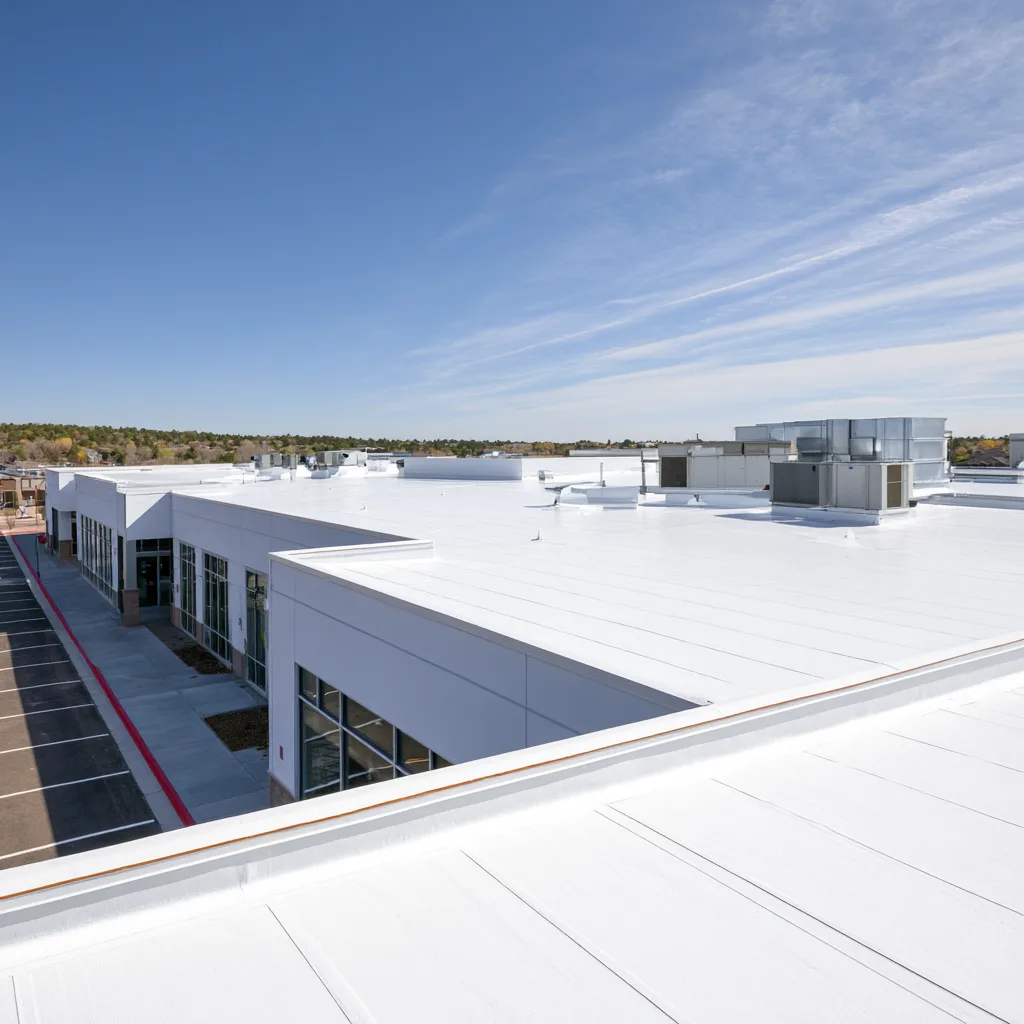
When repairs no longer address the roof’s overall condition, replacement can give the building a defined new assembly. The starting point is the existing system, moisture condition, deck and number and suitability of layers.
The scope also needs to fit the property. Rooftop equipment, tenant access, staging, weather exposure and interior protection influence how the job is arranged.
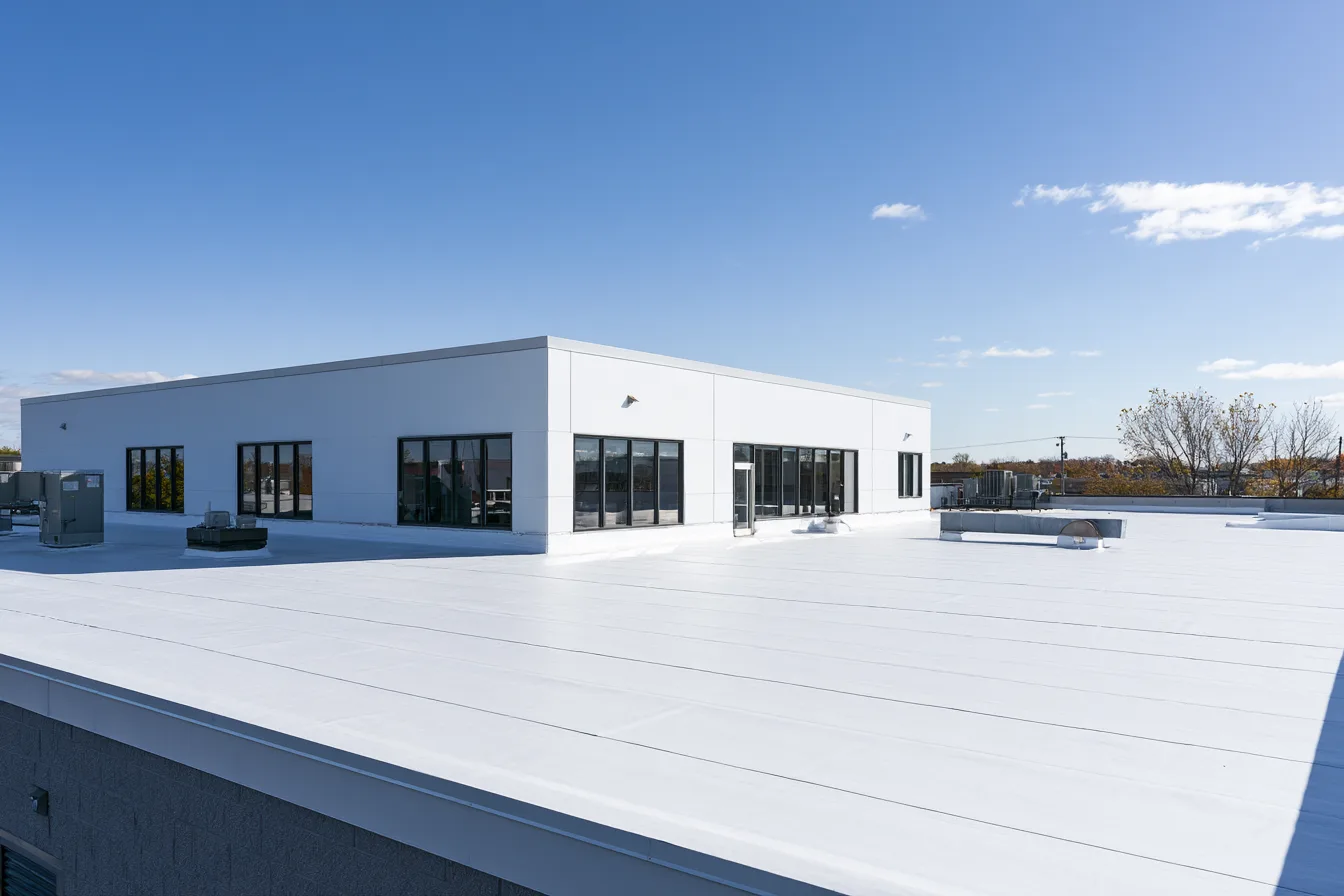
A recover is not simply a way to avoid looking below the covering.
Removal exposes the deck and allows unsuitable or wet layers to be addressed. It adds removal, disposal and temporary weather-closure work.
Keeping suitable existing material can be considered only where the assembly, condition and applicable requirements allow it. Wet or unstable layers cannot be ignored.
Existing-roof evaluation and the selected new system determine the approach. A commercial roof assessment helps establish the options before pricing them.
The new membrane needs a complete support and drainage plan.
The deck, fasteners or adhesive, perimeter and edge metal must fit the designed system and applicable requirements.
Insulation condition, thickness and arrangement affect the assembly. Tapered insulation can be part of a designed drainage solution where appropriate.
Drain outlets, overflow provisions and rooftop curbs need to integrate with the new covering. Related mechanical or plumbing changes require coordination.
A meaningful commercial price follows the actual building and assembly.
Roof size, existing layers, deck condition and moisture findings set the base scope. Hidden conditions need a clear treatment in the project terms.
Deliveries, removal routes, access and tenant needs influence staging. Planned roof openings need weather protection in the work sequence.
TPO, EPDM and modified-bitumen choices have different details. The warranty guide explains material and workmanship coverage without assuming a universal term.
No. The existing assembly, moisture, condition, design and applicable requirements still determine whether recover is suitable. Layer count alone does not settle it.
Yes, the reroof design can include appropriate drainage changes. The cause of ponding, structural condition and outlet layout determine which solution is suitable.
No. That tool models an architectural asphalt scenario. A commercial assembly needs a system-specific scope and estimate.
Share the building location and replacement concern. Request a free roof walk to begin planning the actual commercial assembly.