Repair a defined defect
Compatible membrane repairs or rebuilt flashing can address a contained failure while the surrounding roof remains serviceable. Drainage and concealed moisture still matter.
A commercial roof has to protect the building while the building keeps working. Start with the roof system, the leak or deterioration, and your operating needs.
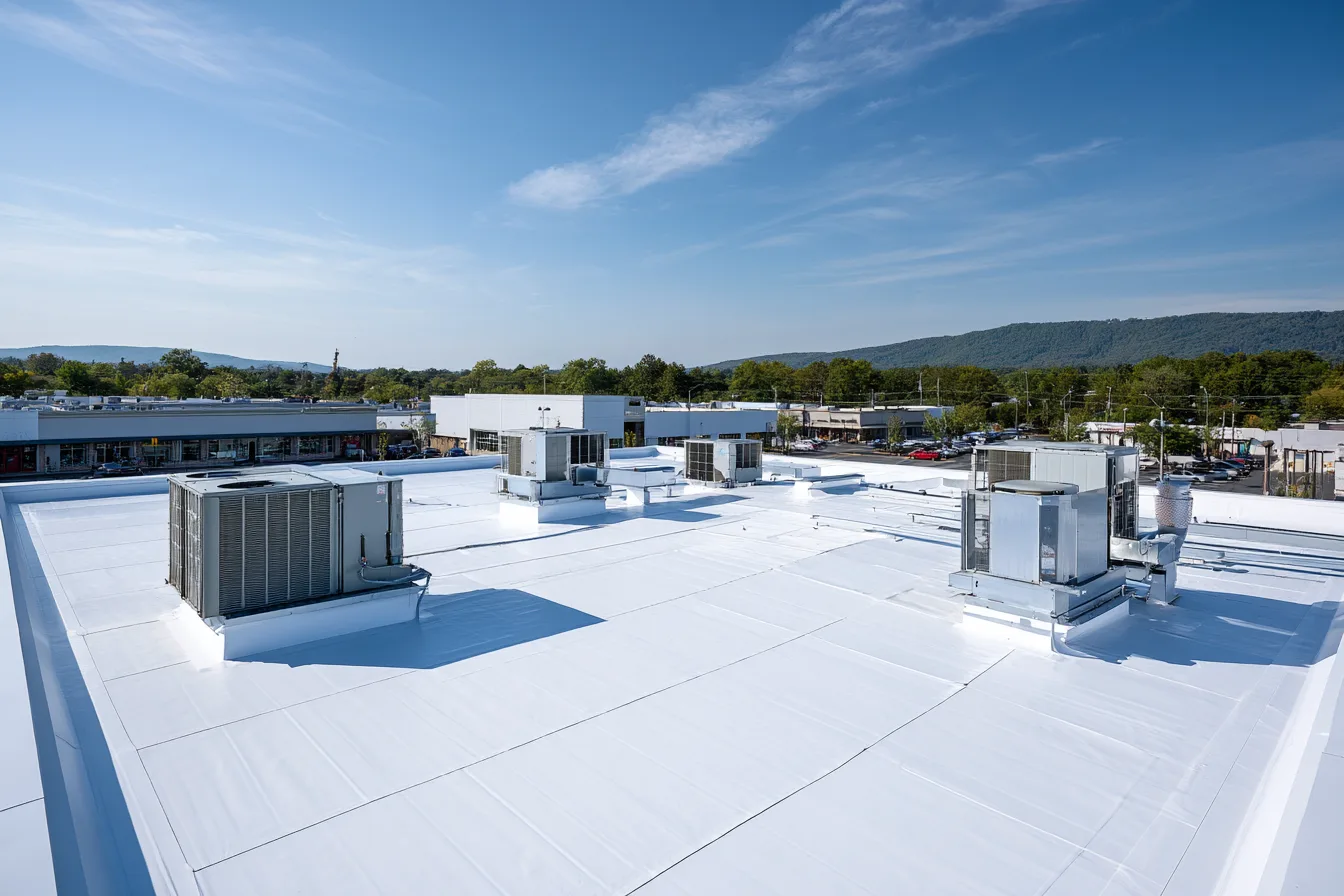
A leak near rooftop equipment needs a different plan from open seams across the field. We consider the membrane or covering, insulation, deck, drainage and the details around curbs and penetrations before discussing the work.
A free roof walk is a useful starting point for a current leak or a planned capital project. Tell us the building location and use, where water is reaching the interior, and any known roof system or maintenance history.
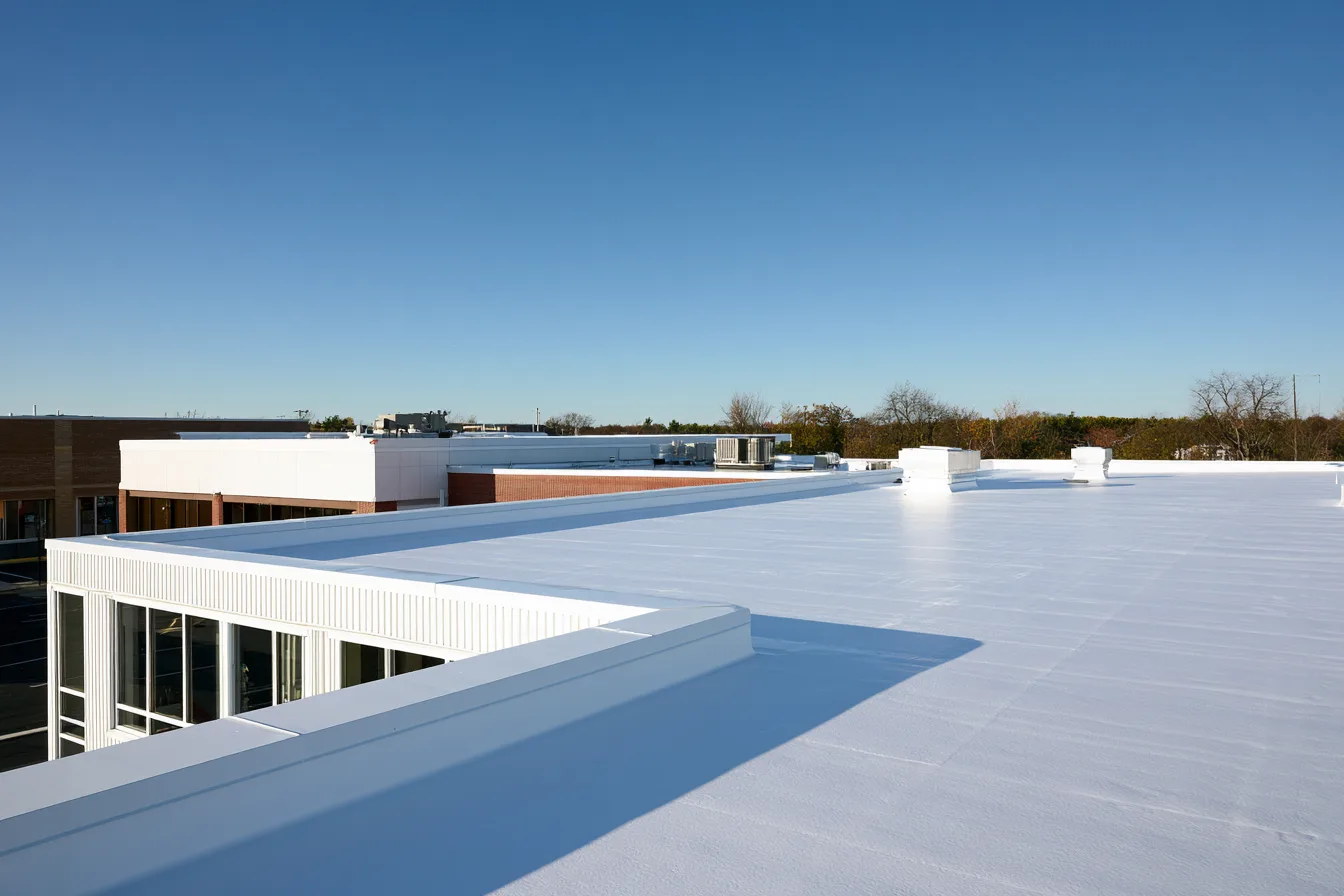
The condition below the surface is central to the decision.
Compatible membrane repairs or rebuilt flashing can address a contained failure while the surrounding roof remains serviceable. Drainage and concealed moisture still matter.
A sound, compatible roof can be a candidate for roof coatings after necessary repairs and preparation. Coating over wet insulation or unstable material leaves the underlying problem in place.
Widespread deterioration, unsuitable layers or damaged substrate can make commercial replacement the useful choice. The new assembly needs a drainage and attachment plan.
Each covering has its own repair materials and details. Identifying the roof comes before selecting a repair product.
| System | What matters for the work | Explore |
|---|---|---|
| TPO | Heat-welded seams, reinforced membrane and compatible flashing at equipment and edges. | |
| EPDM | Rubber membrane, seam tape or adhesive details and compatible repairs. | |
| Modified bitumen | Reinforced bituminous sheets, laps and cap-sheet condition. | |
| Existing low-slope roof | Water entry, drainage and moisture in the layers beneath the covering. |
The project plan needs to fit the way the property is used.
Tenant entrances, loading areas, parking and safe roof access affect staging. Equipment service paths need to remain part of the roof plan.
Opening an existing roof creates a weather-planning task. Tear-off sections, temporary closure and material installation conditions belong in the job sequence.
Measurements, system type, wet areas, insulation needs and equipment details make the price meaningful. A commercial assembly needs its own estimate rather than a residential shingle calculator.
Yes, the work can be planned around building use. The actual repair method, access, interior protection and any disruption depend on the system and location of the damage.
No. Restoration includes repairs, cleaning, compatible preparation and a suitable roof below. Widespread wet insulation, failed decking or an unstable covering can require removal and replacement instead.
Ponding needs a drainage assessment. Debris, blocked outlets, low areas and structural deflection are different causes. The remedy depends on what is holding the water and the condition of the assembly.
Share the building location, roof concern and how the property is used. Request a free commercial roof walk to start the discussion.